Gunite Pools Explained for Houston Homeowners

Gunite is a common method for building custom pools in the Houston area, and if you are planning a build, that word will likely show up on the proposals you read. Knowing what gunite pools involve lets you compare bids on substance, not just price.
This guide covers what gunite is, how a gunite pool is built from layout to first swim, and why curing matters. It also explains how Houston clay, rain, and permitting shape the project, and which questions separate a builder who designs for Houston conditions from one who does not. For a look at finished projects, see our custom pool construction work.
What a Gunite Pool Actually Is
Gunite, Shotcrete, and Concrete: What the Terms Really Mean
The short answer to "what is a gunite pool?" is a concrete pool whose shell is formed by spraying concrete under high pressure over a cage of steel reinforcement bars, called rebar. Here is the precise version:
- Concrete is the material: cement, sand or aggregate, and water.
- Shotcrete is the placement method: concrete sprayed pneumatically into place rather than poured into forms. The term covers all sprayed concrete, whether dry-mix or wet-mix.
- Gunite is dry-mix shotcrete. Dry cement and sand travel through the hose, and water is added at the nozzle by the operator, called the nozzleman, who controls the mix as it is placed.
- Wet-mix shotcrete arrives already mixed with water and is pumped to the nozzle.
That settles gunite vs shotcrete: gunite is one type of shotcrete. It also settles concrete pool vs gunite pool, since a gunite pool is a concrete pool placed by a specific method. That is why a Houston builder's contract may say "shotcrete" for what the market still calls a gunite swimming pool.
Either method can produce an excellent shell. What matters more is the crew's experience, the steel design, and how the shell is cured.
How Gunite Pools Are Built, Step by Step
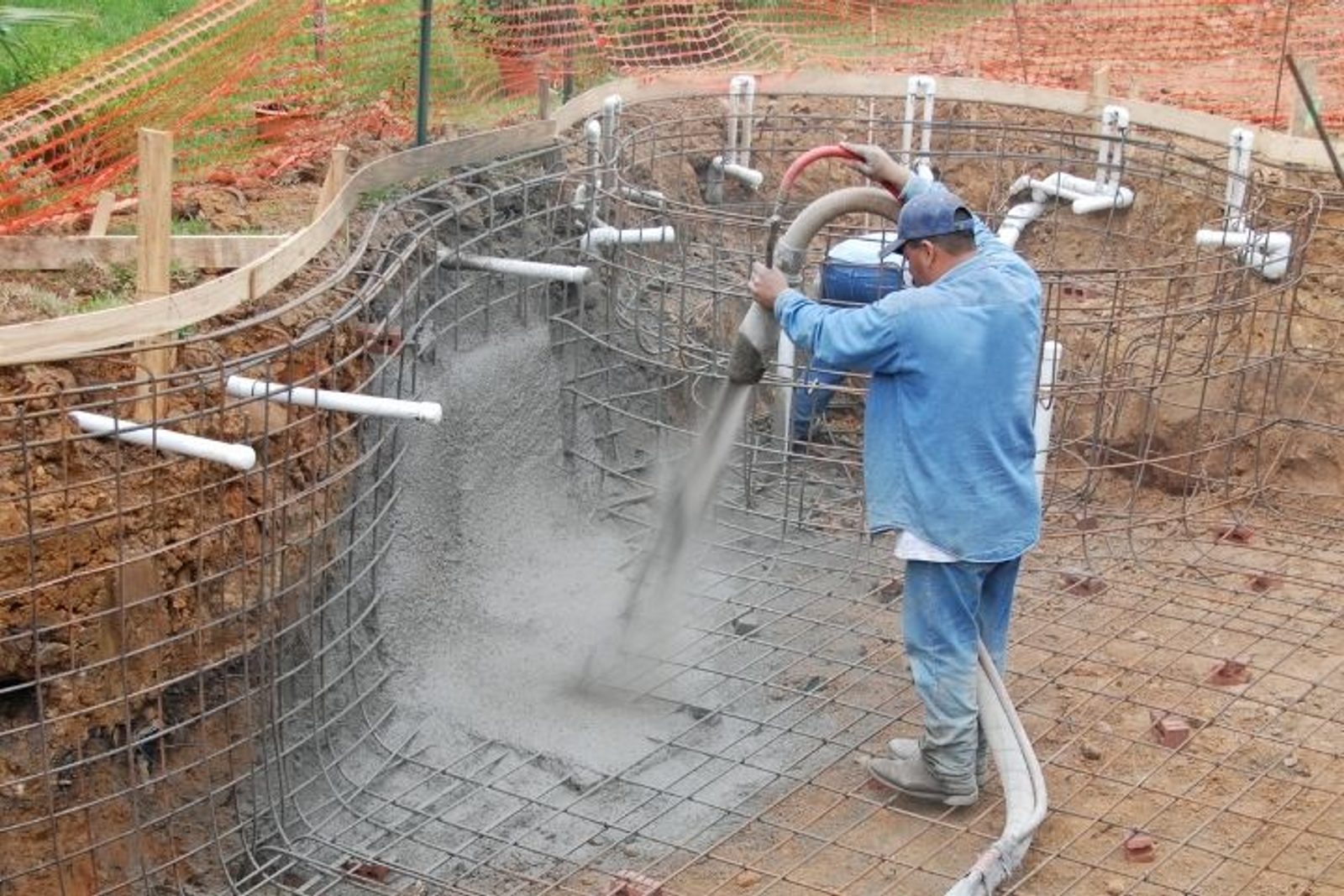
Gunite pool construction follows a set sequence, and each stage is finished before the next begins. For the general phases of any custom pool build, see our pool building process guide.
Design, Layout, and Approvals
Every in-ground swimming pool starts with a site visit. A good builder measures setbacks, locates any utility easements, notes trees and slopes, and watches where water goes when it rains, then designs around those limits and the features you want, such as an integrated spa or a tanning ledge.
Plan the space around the pool at this stage, too. Patio covers, an outdoor kitchen, and seating areas affect where plumbing, gas, and electrical need to run. Plans then go to the city or county for a building permit and, in many neighborhoods, to the HOA.
Excavation, Steel, and Plumbing
In older Houston neighborhoods with narrow side yards and mature trees, access shapes excavation: a fence panel may come out, equipment size and digging method may be limited, and hauling off dirt can take longer and cost more.
Next, the crew ties the rebar cage that gives the shell its strength. The steel reinforcement schedule, meaning the size and spacing of the bars, is typically part of the engineered design. Plumbing lines for returns, drains, skimmers, and features are set in place. Ask your builder which inspections your jurisdiction requires before the shell is sprayed.
The Gunite Application
On shoot day, a rig and compressor feed the dry mix to the nozzleman while the crew shapes and trims the walls. The concrete must be properly consolidated around the steel, with no voids behind the bars, and shaped to the correct thickness. A pool shell can be placed in sections or phases with properly prepared joints, so the timing depends on the design and the builder's plan.
Curing the Shell
Curing is the stage almost no one explains, yet it is one homeowners are sometimes asked to help with. New concrete keeps gaining strength as it hydrates, and it needs moisture to do that. If the surface dries too fast, especially in Houston heat, it is more prone to cracking and reduced watertightness.
The American Shotcrete Association's position statement on curing pool shotcrete calls for keeping the shell continuously moist for at least seven days. Where a cementitious interior finish, such as pool plaster, will follow, plastering industry guidance recommends continuing moist curing for longer. Exact schedules vary by builder, weather, and design.
In practice, some builders ask the homeowner to help keep the shell wet, often with a garden hose. Before the shoot, ask your builder:
- What is the cure plan, and for how many days?
- Who is responsible for wetting the shell, and how often?
- What should I do on very hot or windy days?
Tile, Coping, and Decking
After curing, waterline tile is set and pool coping, the cap that finishes the pool's top edge, is installed, followed by the pool decking. A properly detailed expansion joint between the coping and the deck lets the two move independently, which matters a great deal on Houston clay.
Interior Finish and Startup
The pool interior finish is applied last, typically pool plaster, a quartz finish, or a pebble finish. The pool is filled right away, and startup begins: equipment is commissioned, and the water is balanced and brushed carefully while the new finish settles. For a closer look at how these finishes differ, see our pool renovation guide.
How long does the whole project take? It depends on plan review and approvals, trade sequencing, lot access and equipment staging, material availability, and extended rain. A good builder explains the phases rather than promising a date. Our guide to how long it takes to build a pool in Houston breaks down each phase and what can delay it.
Why Gunite Works Well in Houston Backyards
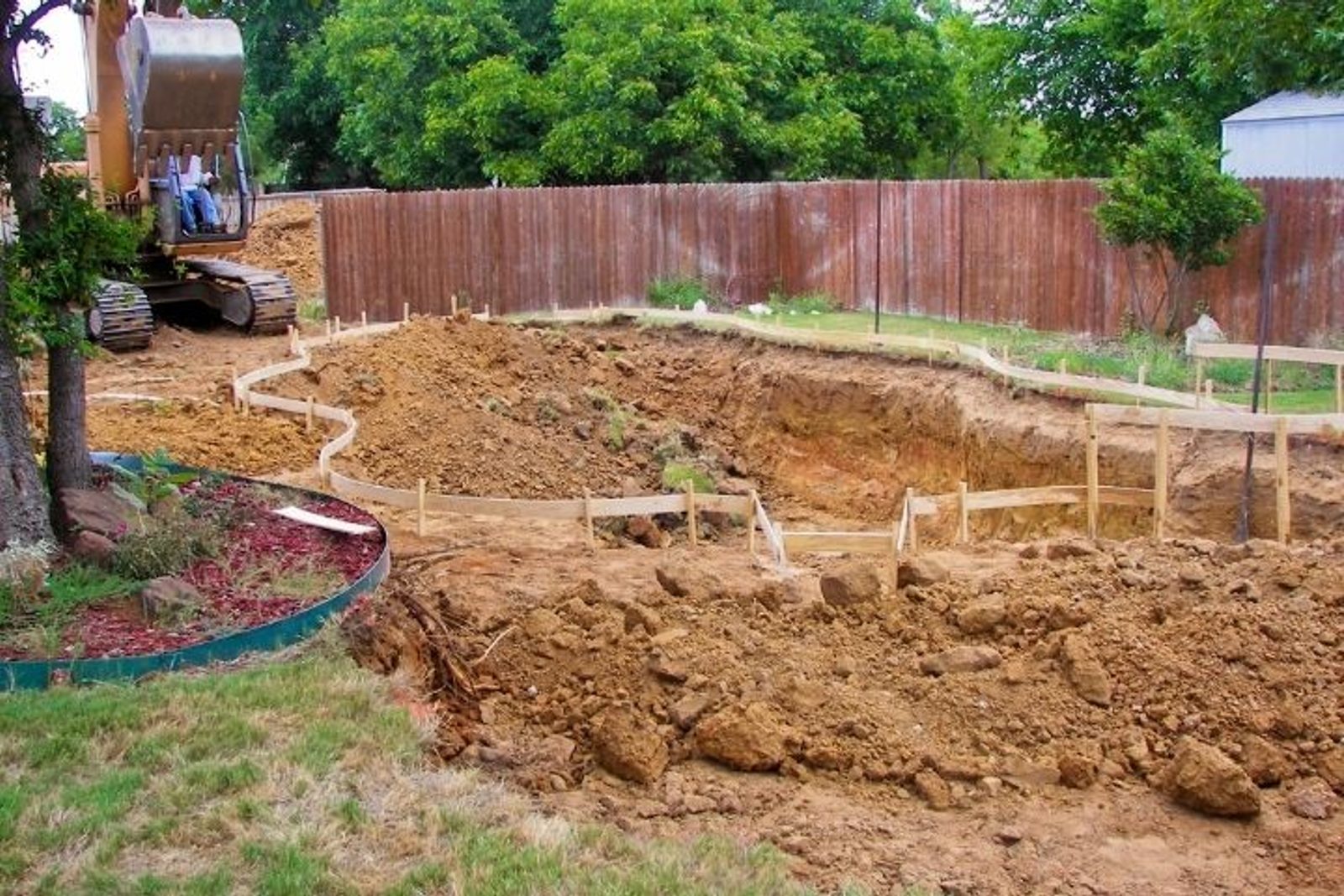
Soil, water, and weather here shape how a gunite pool in Houston should be designed, and each one tells you something to ask.
Building on Expansive Clay Soil
Many Houston-area soils are expansive clays that swell when they absorb water and shrink as they dry. That shrink-swell cycle repeatedly stresses anything built on it.
A gunite shell is designed for its specific site, and a good builder accounts for soil movement with:
- Geotechnical evaluation where the site warrants it
- A steel reinforcement schedule matched to the conditions
- Adequate shell thickness and proper consolidation during the shoot
- Expansion joints between the shell and the deck
- Site drainage that moves water away from the pool instead of letting it pond against it
Rainfall, Groundwater, and Drainage
Houston averages about 52 inches of rain per year, according to National Weather Service climate normals for Bush Intercontinental Airport from 1991 to 2020, and some Houston-area lots also have a high groundwater table. When the ground around an empty or partly drained pool is saturated, water pushes up and inward on the shell. That force is hydrostatic pressure, and in extreme cases it can shift or lift a pool.
A hydrostatic relief valve in the floor can let groundwater enter the pool to relieve that pressure. This is also why draining a gunite pool is a job for a professional who can check groundwater conditions first.
Because gunite is shaped on site, the shell can also be designed around mature trees, drainage paths, and existing patios.
Gunite Pools vs. Fiberglass and Vinyl Liner Pools
Gunite is not the right choice for every yard. It is the right method for custom shapes, integrated spas and features, and difficult or irregular sites. The trade-offs are a longer build, periodic resurfacing, and water balance that needs steady attention, all covered in the table below.
| Factor | Gunite | Fiberglass | Vinyl Liner |
|---|---|---|---|
| Design freedom | Nearly any shape, depth, or feature | Limited to manufacturer molds | Flexible within panel and liner options |
| Site adaptability | Shaped around trees, slopes, and tight lots | Needs access for a large one-piece shell | Moderate |
| Features and integration | Integrated spas, tanning ledges, raised walls, custom steps | Features built into the mold | More limited |
| Installation time | Generally the longest, due to curing and finish stages | Generally the shortest once the shell arrives | Generally in between |
| Repairability | Shell and finish can be repaired and resurfaced | Repairs possible, color matching can be difficult | Liner can be patched or replaced |
| Long-term care | Periodic resurfacing, attentive water balance | Smooth surface, generally lower brushing demand | Periodic liner replacement |
Fiberglass can be a good fit where an available shape works and speed matters. The gunite vs fiberglass pool decision usually comes down to whether your yard and feature list fit a pre-made shell.
Do Gunite Pools Crack?
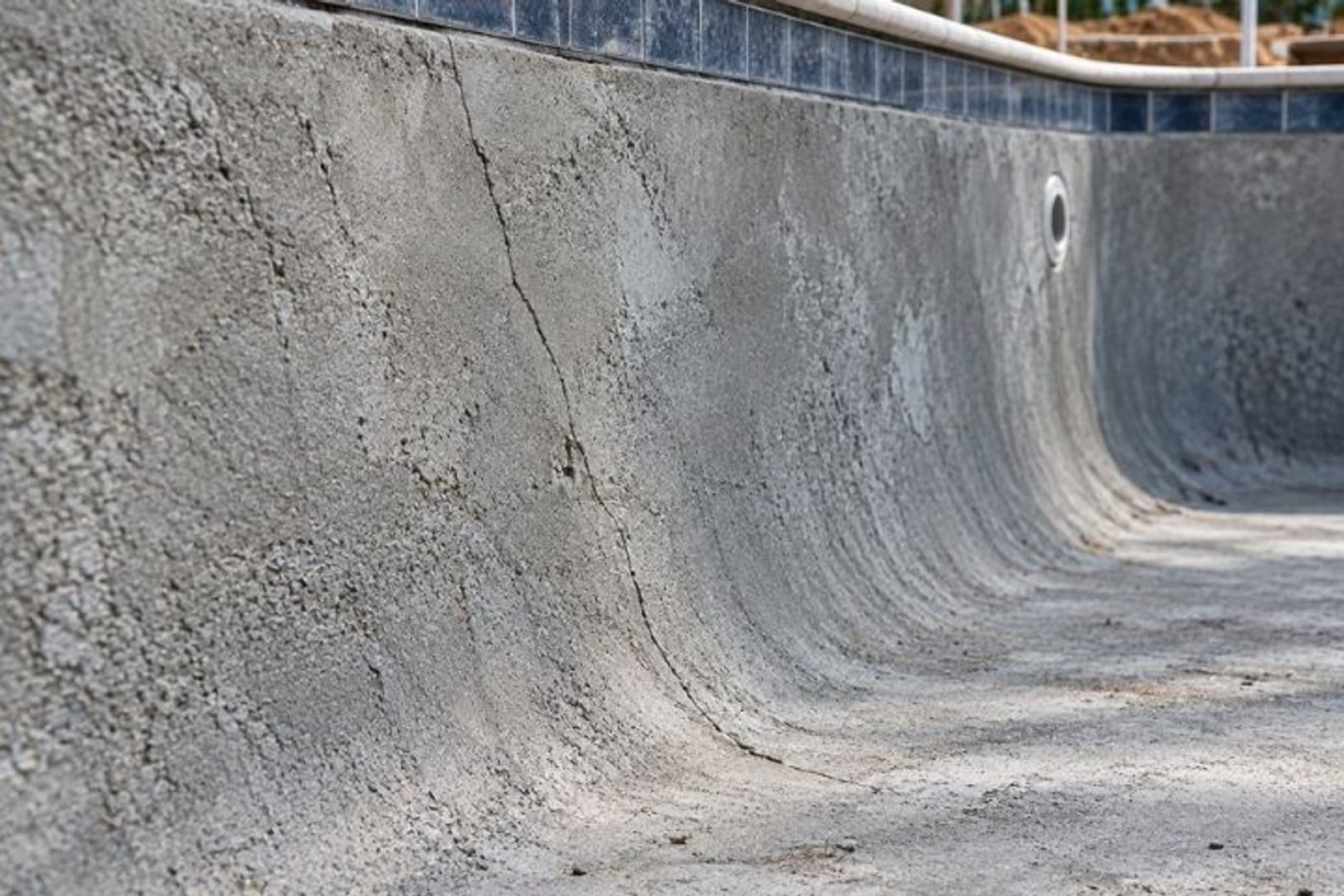
Pools are meant to be watertight, not waterproof, and some fine cracking is normal in a plaster finish. Cementitious finishes commonly develop fine shrinkage cracks, called craze cracking, before the pool is filled, and those cracks typically reseal once underwater. Shotcrete also cannot realistically be fully watertight at penetrations or where it meets a different material.
Structural cracks, the kind that run through the shell itself, are a different matter from finish shrinkage. Contributing factors can include soil movement, groundwater pressure under an empty pool, poor curing, or shortcomings in the steel design, shell thickness, or consolidation. That is why the soil, curing, and drainage steps earlier in this guide matter, and why a crack that keeps growing is worth showing to a builder or pool professional.
- Usually normal: fine, shallow, map-like surface lines in the plaster
- Worth a professional look: a structural crack that is wide, runs through the shell, keeps growing, or comes with water loss or shifting tile and coping
What Drives the Cost of a Gunite Pool
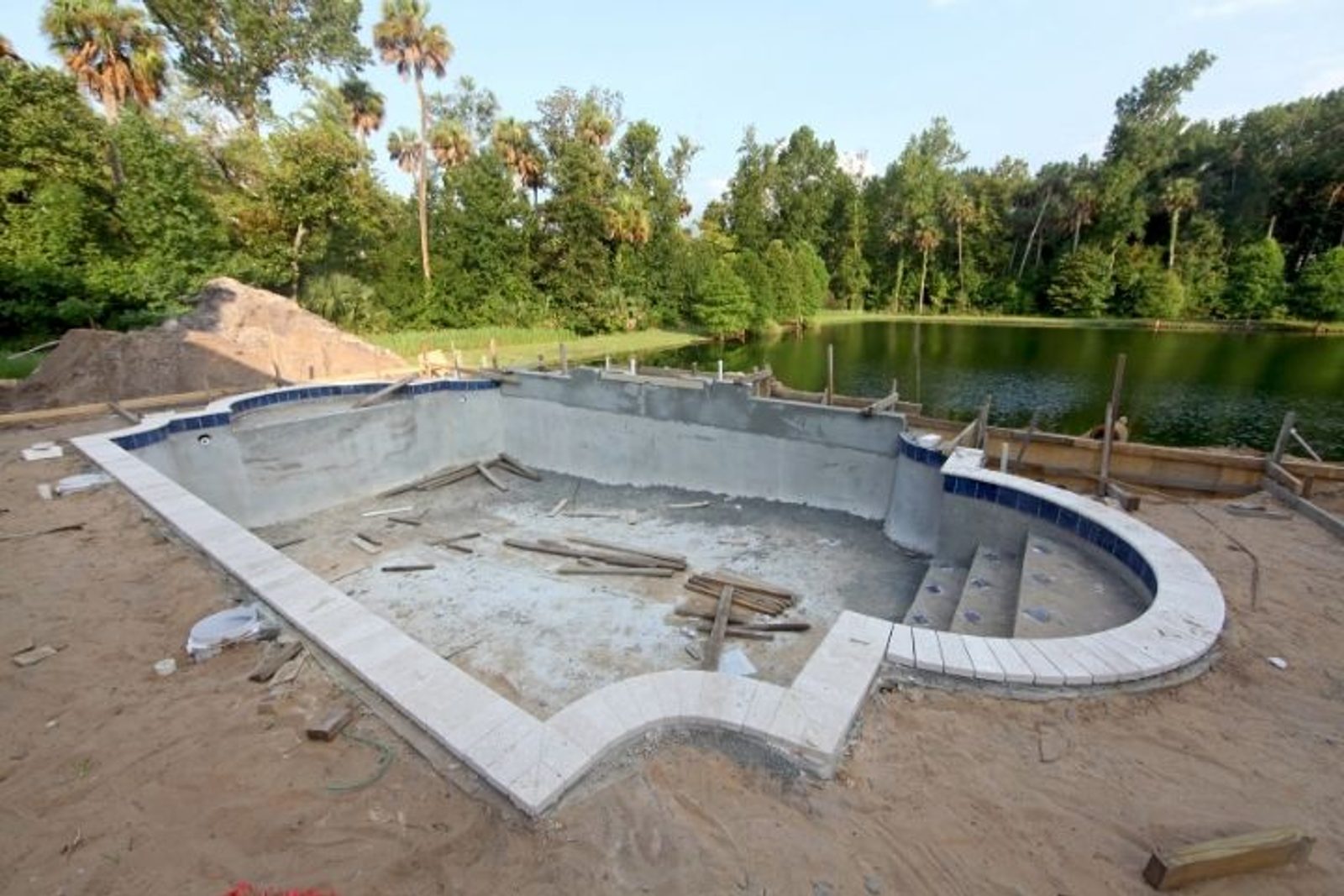
No two lots are the same, so price comes down to these variables:
- Size and depth
- Shape complexity
- Site access and excavation
- Soil and groundwater conditions
- Features and integrated spa design
- Decking scope
- Drainage work
- Finish tier
A real number requires a site visit and a written scope for your lot. Our custom pool cost guide walks through how each of these variables affects price.
Living With a Gunite Pool
Weekly Care and Water Balance
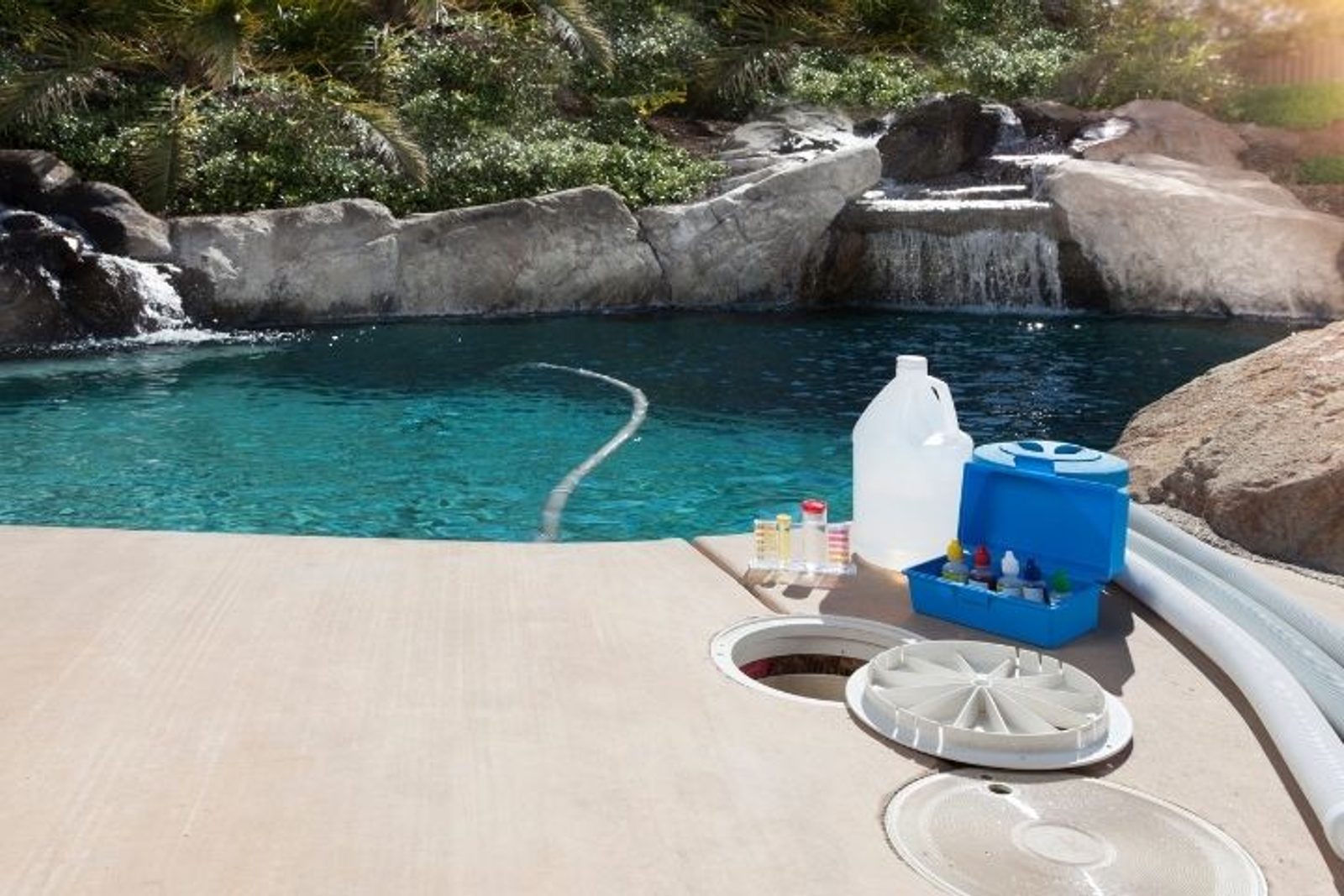
Gunite pool maintenance centers on skimming, brushing, vacuuming, running the filtration system, and keeping water balanced, including pH, total alkalinity, and calcium hardness. A plastered surface is cementitious, so water that is out of balance can either dissolve the surface or leave scale on it. Frequent heavy rain disrupts that balance repeatedly, which is why consistency matters here.
A variable speed pump and pool automation make it easier to run filtration efficiently and on a schedule. Many owners choose weekly pool maintenance to keep chemistry steady through the swim season.
Resurfacing and Long-Term Maintenance
Any cementitious finish will eventually need pool resurfacing. How soon depends on water chemistry, use, installation quality, and maintenance. If you own an aging gunite pool, the shell can usually be renovated with a new interior finish, tile, and equipment rather than replaced. Our guide to pool renovation vs. a new build explains how to decide.
Permits and Approvals in the Houston Area

Permitting depends on where your address sits, and a good builder confirms the requirements and handles the applications.
Inside Houston City Limits
Inside the City of Houston, a building permit for a new pool is obtained through the Houston Permitting Center, and plans are submitted electronically. A health inspection is also required.
Unincorporated Harris County
In unincorporated Harris County, residential pool permits go through the Office of the County Engineer, and pools in the floodplain carry additional requirements.
Montgomery County and cities such as Humble, Conroe, and Tomball run their own processes. Requirements differ by jurisdiction, so your builder should confirm them for your address.
HOA Review and Site Restrictions
HOA architectural review runs on its own timeline, separate from any municipal permit, so build it into your schedule early. Pool barrier requirements are set by locally adopted building codes, so confirm what applies to your address, along with setbacks and utility easements.
How to Evaluate a Gunite Pool Builder in Houston

Before you sign with any custom pool builder in Houston, ask:
- How did you evaluate my site, including soil, drainage, access, and groundwater?
- What is the cure plan, and what will you need from me?
- How are the deck and shell detailed to move independently?
- Who pulls the permits and handles HOA submittals?
- What does the written scope include and exclude?
- What warranty is offered, and who backs it?
- Which trades are subcontracted?
- Who handles the electrical work, and what state license do they hold?
That last question matters more than most homeowners realize. Texas does not issue a general pool builder license; it licenses the trade work. For pool and spa equipment, the Texas Department of Licensing and Regulation (TDLR) authorizes holders of a Residential Appliance Installer license to handle the equipment-side electrical work.
That license covers equipment on the load side of the control center under the National Electrical Code, such as pumps and motors, underwater lighting, GFCI protection, heaters, automation, and salt systems. New or upgraded line circuits require a licensed electrical contractor with a master electrician. GM Outdoor Living, Pool & Spa holds the TDLR Residential Appliance Installer Contractor license (#1278). You can verify any contractor, including us, through TDLR's Active License Search.
Gunite Pools FAQs
Can I add features to a gunite pool later?
Many can be added later, but anything in the shell, such as a tanning ledge or raised wall, means cutting into existing concrete. If you plan to add a spa, lighting, or fire features down the road, have plumbing and conduit stubbed in during the original build.
Can you build a gunite pool with a narrow side yard?
Often, yes. Tight access affects equipment, digging method, and cost, so your builder should assess it on the first site visit.
Can a gunite pool be built during hurricane season?
Yes, though heavy rain can pause excavation and site work. Ask your builder how open excavations and new shells are protected during storms.
Can a gunite pool include a built-in spa?
Yes. Because the shell is shaped on site, a spa can be built into the same structure as the pool, often with a spillover edge into the main pool and shared filtration equipment. Deciding on the spa during design lets the plumbing and equipment be sized for both.
Plan Your Houston Gunite Pool With a Free Design Consultation
Gunite is likely the right fit if you want a custom shape, an integrated spa or tanning ledge, or your lot has trees, slopes, or tight access. If a standard shape works and speed matters most, fiberglass may deserve a look.
Either way, the right pool starts with the ground it sits on. From our Humble and Houston offices, GM Outdoor Living, Pool & Spa builds custom pools and spas across Greater Houston, and our in-house team uses 3D design software so you can preview your pool before construction begins. We also submit the required permits and HOA applications for your area. Schedule a free design consultation to talk through your lot and the pool you want.
Related Articles

Pool Finishes Compared for Houston Backyard Pools
Compare plaster, quartz, pebble, glass bead, and tile pool finishes for Houston homes, including appearance, texture, durability, maintenance, and cost.

Pool Maintenance After Heavy Rain in Houston
Keep your Houston pool clean and balanced after heavy rain. Follow these practical steps for debris removal, water testing, filtration, and water levels.

Key Factors That Determine Outdoor Kitchen Cost in Houston
Why do outdoor kitchen quotes in Houston vary so much? Explore how appliances, materials, soil conditions, utilities, and permits shape your budget and learn what to ask before hiring a builder.