Common Pool Problems and What's Causing Them

Your pool looked great at the start of the season. Now the water is hazy, there's a green tint along the walls, or you're catching a whiff of something sharp every time you walk outside. Something is clearly off, but what?
Most residential pool owners know when their pool has a problem. The harder part is understanding why it's happening. Without that, you're guessing at solutions, throwing chemicals at symptoms, and often making things worse.
This guide breaks down the most frequent pool problems homeowners encounter, explains the actual causes behind them, and helps you figure out whether you're dealing with a maintenance issue you can correct yourself, or something that needs a professional eye.
Why Pool Problems Are Almost Always About Chemistry, Circulation, or Both
Before diving into specific issues, it helps to understand the two root systems behind nearly every pool problem.
Water chemistry is the balance of sanitizers, pH, alkalinity, calcium hardness, and cyanuric acid that keeps your water clean, safe, and from damaging your equipment and surfaces.
Circulation and filtration are how your pump, skimmer, return jets, and filter work together to move water, remove debris, and distribute sanitizers evenly.
When either system breaks down, or when both are struggling at the same time, you start seeing the symptoms below.
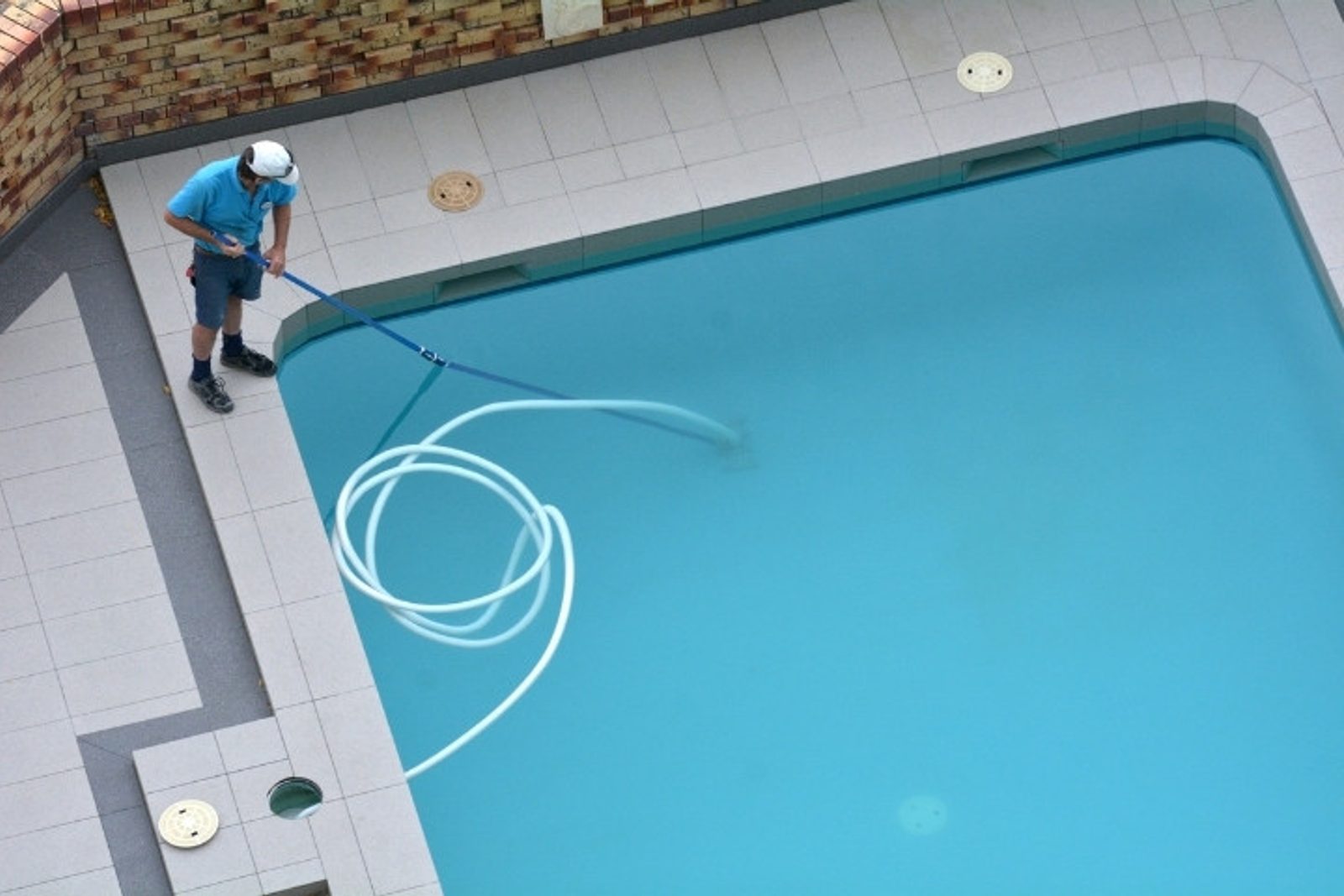
Cloudy or Hazy Pool Water
What It Looks Like
The water is dull, milky, or you can't clearly see the bottom of the deep end.
What's Causing It
Cloudy water is one of the most common pool problems, and it usually comes from one of three places:
- Water chemistry imbalance — High pH, high alkalinity, or elevated calcium hardness causes minerals to fall out of solution and cloud the water. Low free chlorine means contaminants aren't being sanitized, allowing organic debris and bacteria to build up.
- Poor filtration or circulation — If your filter is dirty, clogged, or undersized, it can't remove the fine particles that cause cloudiness. Dead spots, areas where water isn't circulating well due to return jet positioning or a weak pump, let debris accumulate.
- High bather load or heavy debris — Sweat, sunscreen, body oils, and organic material from swimmers introduce contaminants faster than a neglected maintenance routine can handle. Heavy rain or wind events dump debris and dilute water chemistry quickly.
Is It Cosmetic or Concerning?
Cloudy water is both. Aesthetically it's a problem, but it also signals that your sanitizer is being overwhelmed, which means bacteria may not be getting killed effectively. Don't swim in persistently cloudy water until you've identified the cause.
What to do: Test your water chemistry first. Check free chlorine levels, pH (should be 7.4–7.6), and alkalinity (80–120 ppm). If chemistry checks out, inspect your filter pressure gauge. Elevated pressure often indicates a dirty filter that needs cleaning or backwashing.
Green Water and Algae Growth
What It Looks Like
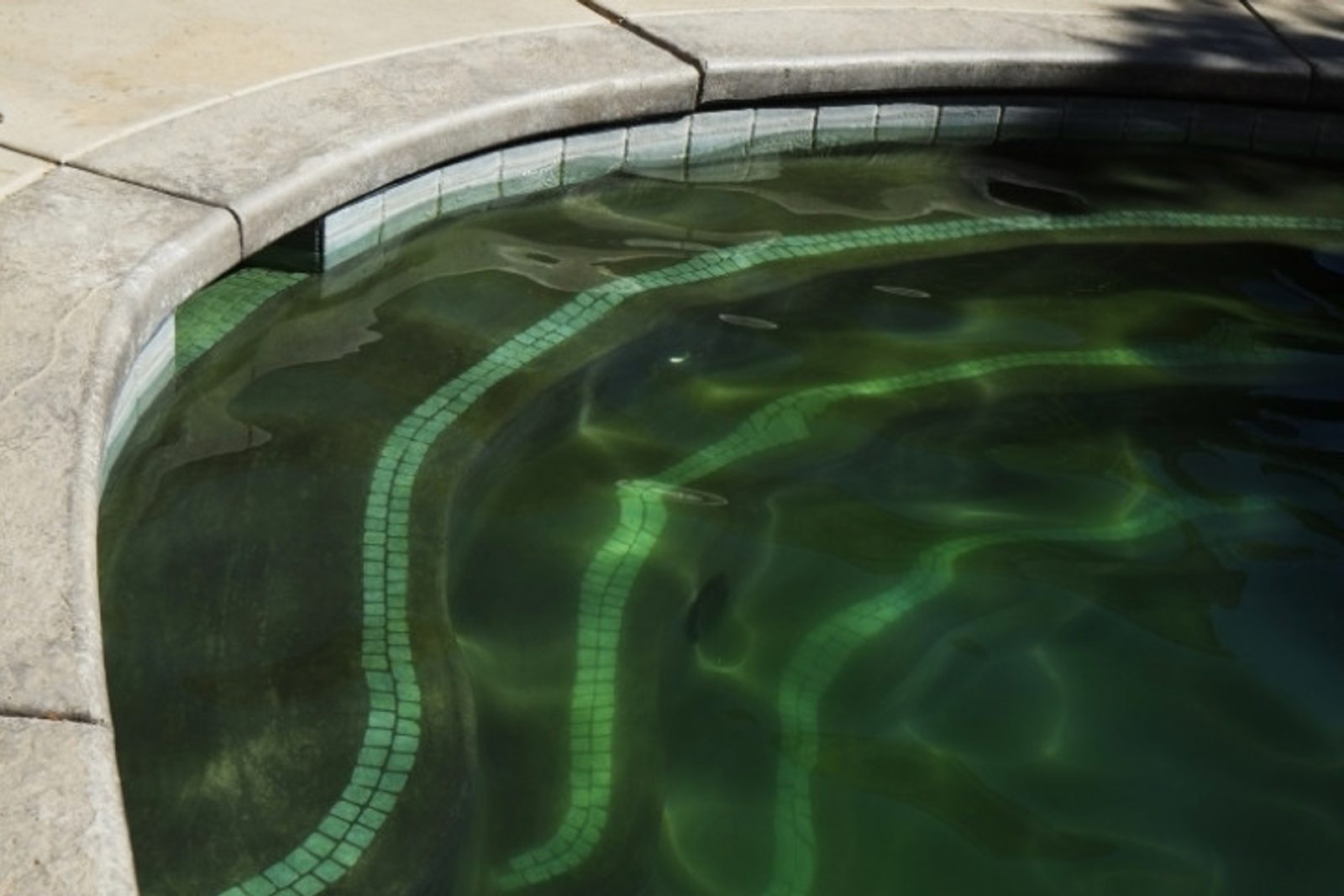
Water has a green tint, or you see green, black, or yellow-green coating on pool surfaces and steps.
What's Causing It
Green water almost always means algae growth. An algae bloom happens when:
- Free chlorine drops too low — Chlorine is your primary sanitizer and algae killer. When levels fall below 1 ppm, algae can take hold within hours, especially in warm water.
- Cyanuric acid is too high or too low — Cyanuric acid protects chlorine from UV degradation caused by sun exposure. But too much of it (above 80 ppm) locks up your chlorine and renders it ineffective, a condition sometimes called chlorine lock.
- Poor circulation creates dead spots — Algae thrives in areas your pump and return jets don't reach. Corners, steps, and behind ladder anchors are common starting points.
- Inconsistent maintenance routine — Pools left without regular brushing, vacuuming, and water testing for even a week during hot weather can go green fast.
Is It Cosmetic or Concerning?
Green water is a health concern. Algae itself isn't always dangerous, but the bacteria that thrive alongside it can be. Heavy algae growth also signals your sanitizer system has failed.
What to do: Shock treatment (superchlorination) is typically the first step, followed by brushing walls and running your filter continuously. You may need a clarifier or flocculant to help clear dead algae from the water. If the problem keeps returning, have a professional assess your circulation system and cyanuric acid levels.
Foam on the Pool Surface
What It Looks Like
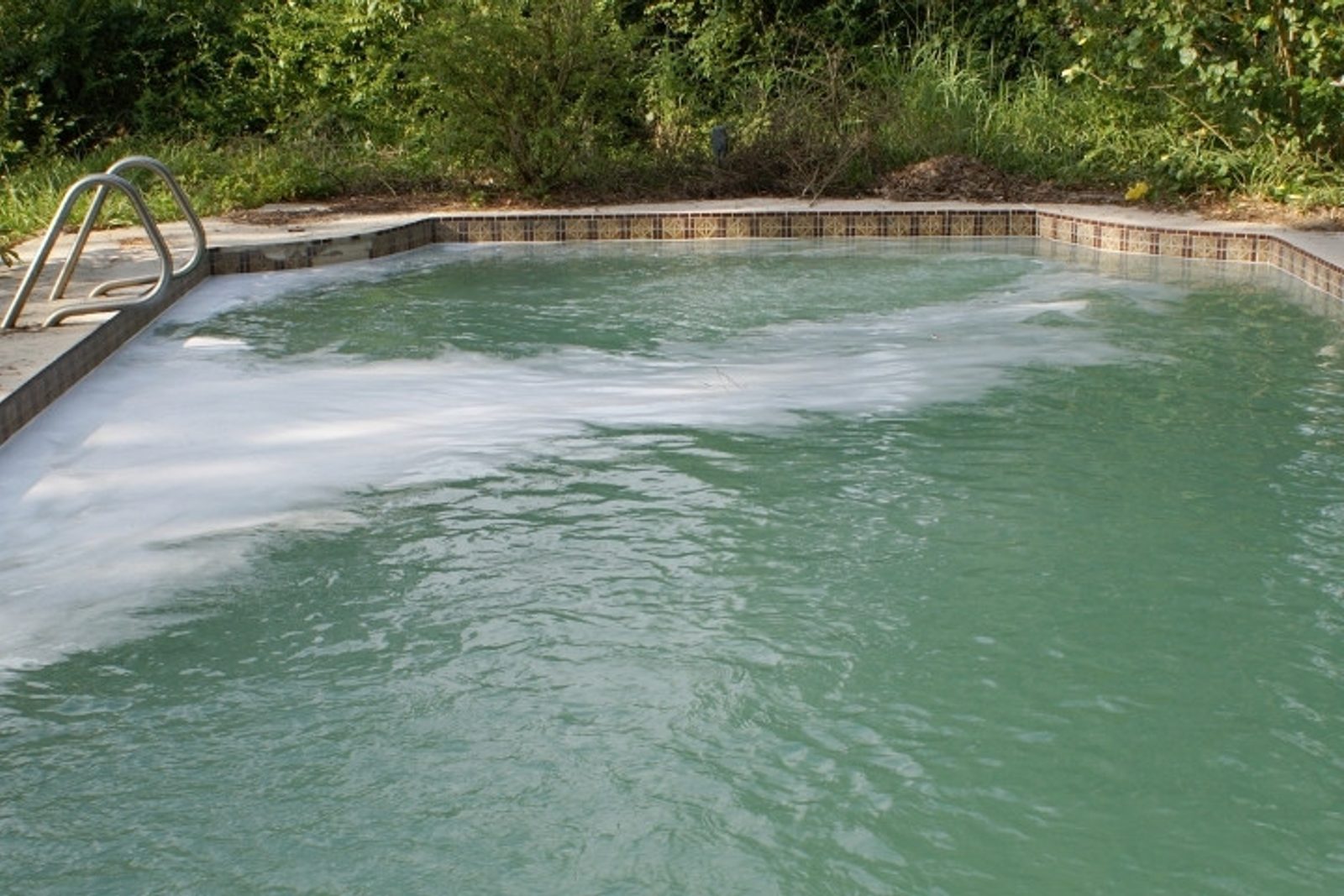
Thick, persistent foam floating on the water, especially near return jets or the skimmer.
What's Causing It
Surface foam is almost always caused by contaminants in the water that lower surface tension:
- Algaecide overuse — Many algaecides are soap-based. Using too much, or using the wrong type, creates foam.
- Body products and organic material — High bather load introduces lotions, shampoos, and body oils. These are surfactants that cause foaming when the water is agitated.
- Low calcium hardness — Soft water (calcium hardness below 150 ppm) is more prone to foaming than properly balanced water.
What to do: Test calcium hardness and adjust if needed. Shock the pool to oxidize organic contaminants. Reduce algaecide use and switch to a non-foaming formula if needed.
Strong Chemical Odor

What It Looks Like
That sharp, eye-burning "chlorine" smell, especially strong around the water surface.
What's Causing It
Here's a common misconception: a strong chlorine smell doesn't mean there's too much chlorine. It means there's combined chlorine, specifically chloramines, in the water.
Chloramines form when free chlorine bonds with nitrogen-containing contaminants like sweat, urine, and body oils. They're a byproduct of your sanitizer doing its job, but they're ineffective as disinfectants and cause the familiar harsh smell and eye irritation.
What to do: Shock treatment with an oxidizer breaks up chloramines and restores free chlorine. This is called breakpoint chlorination. Proper water balance and reducing bather-introduced contaminants, like encouraging swimmers to shower before entering, helps prevent buildup.
Staining on Pool Surfaces
What It Looks Like
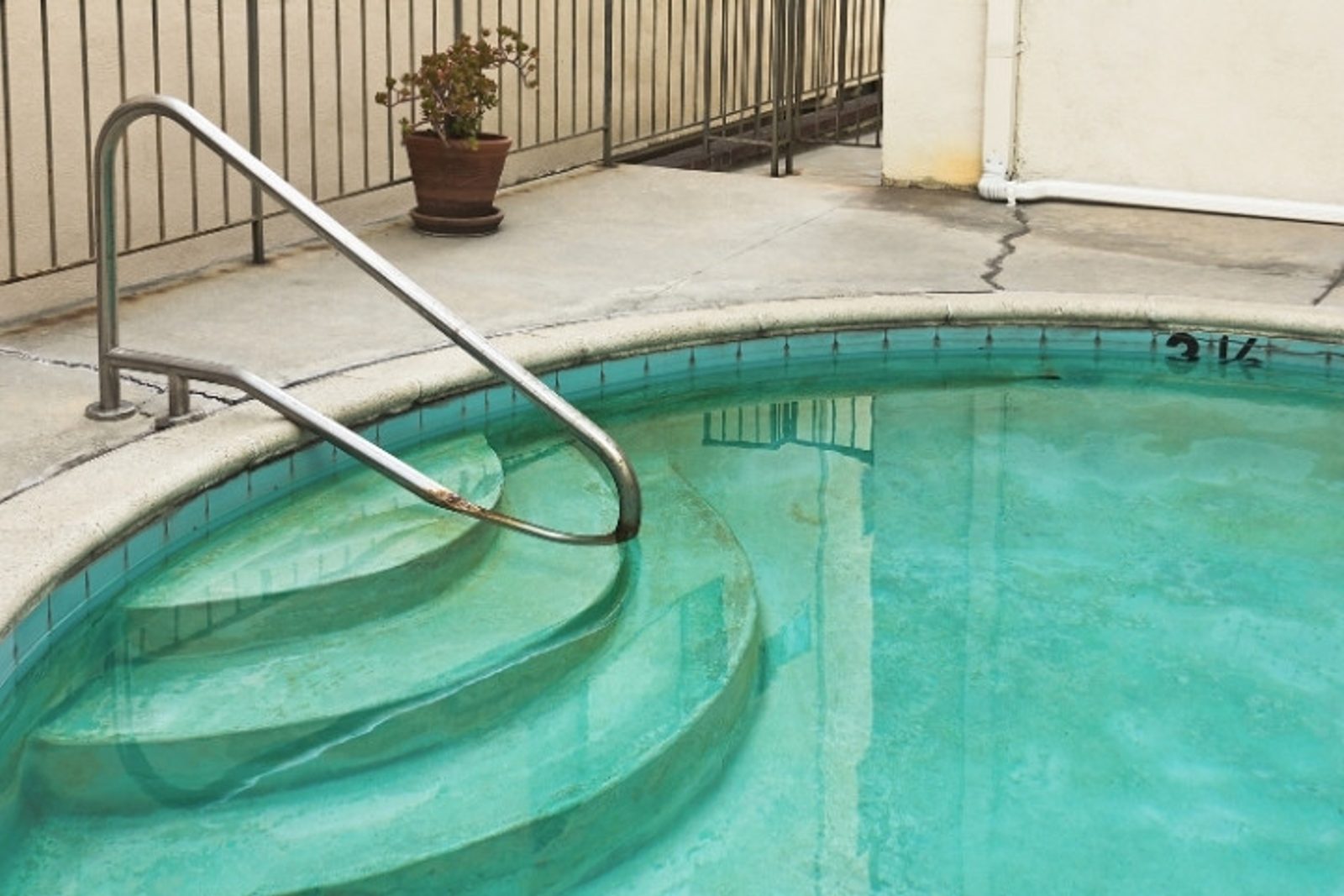
Brown, rust, blue-green, or black spots and streaks on the plaster, liner, or walls, or a rough, scaly deposit forming along the waterline.
What's Causing It
Stains fall into two main categories:
Metal stains (brown, rust, or blue-green) are caused by:
- High metal content in your fill water (iron, copper, manganese)
- Corroding equipment or fittings leaching metals into the water
- Low pH, which makes pool water more corrosive and accelerates metal release
Organic stains (brown, black, or tannin-colored) come from:
- Leaves, berries, or plant material left on the pool floor
- Algae embedded into plaster or liner surfaces
- Debris collecting along the waterline
Scale buildup and mineral deposits appear as white or gray crusty patches, typically caused by high calcium hardness combined with high pH. When these are both elevated, calcium carbonate precipitates out of solution and bonds to pool surfaces and equipment.
Is It Cosmetic or Concerning?
Metal and organic stains are primarily cosmetic but indicate underlying water chemistry problems. If left uncorrected, they can cause permanent surface damage, particularly to plaster and concrete. Scale buildup also clogs return jets and reduces equipment efficiency over time.
What to do: Identify the stain type first, a metal stain test kit is helpful here. Adjust chemistry, particularly pH and alkalinity. Persistent metal staining may require a sequestrant or chelating agent. Liner or plaster staining that doesn't respond to chemistry adjustment often benefits from a professional assessment, as it may require acid washing or resurfacing.
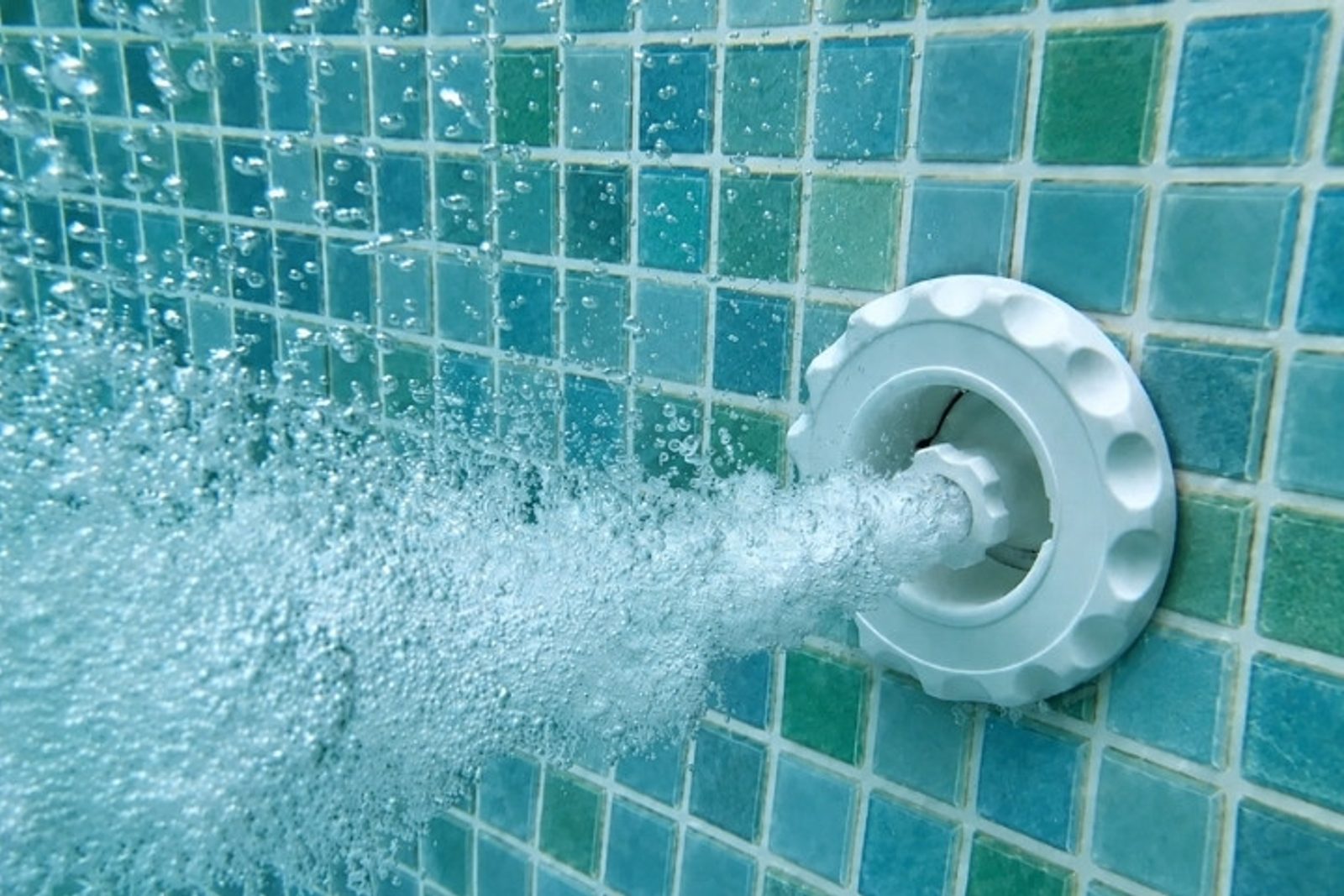
Low Water Pressure or Weak Return Jets
What It Looks Like
Weak flow from return jets, reduced skimmer suction, or your pressure gauge reading unusually high or low compared to its normal operating range.
What's Causing It
This is one area where the problem is more likely equipment-related than chemistry-related:
- Clogged pump basket — Debris blocking the basket before the pump reduces flow throughout the entire system.
- Dirty or clogged filter — A sand filter, cartridge filter, or DE filter that hasn't been maintained will restrict water flow. An elevated pressure gauge reading typically signals it's time to backwash or clean filter cartridges.
- Air leaks in the plumbing — Air entering the suction side of your pump reduces efficiency and causes erratic pressure readings.
- Partially closed valves — Sometimes a valve gets partially closed during maintenance and isn't fully reopened, restricting flow quietly.
- Pump wear — Older pumps lose efficiency over time. If pressure stays consistently low despite a clean filter and clear basket, the pump itself may be underperforming.
Is It Cosmetic or Concerning?
Low flow is a circulation problem, which means your sanitizer isn't distributed properly, your filter isn't cleaning effectively, and dead spots are forming throughout the pool. This compounds every other problem on this list and is worth investigating promptly.
What to do: Start with the basics, check and clean the pump basket, check filter pressure, and backwash or clean the filter. If pressure remains abnormal, have a professional inspect the plumbing for air leaks or assess pump performance.
When to Handle It Yourself vs. When to Call a Pro
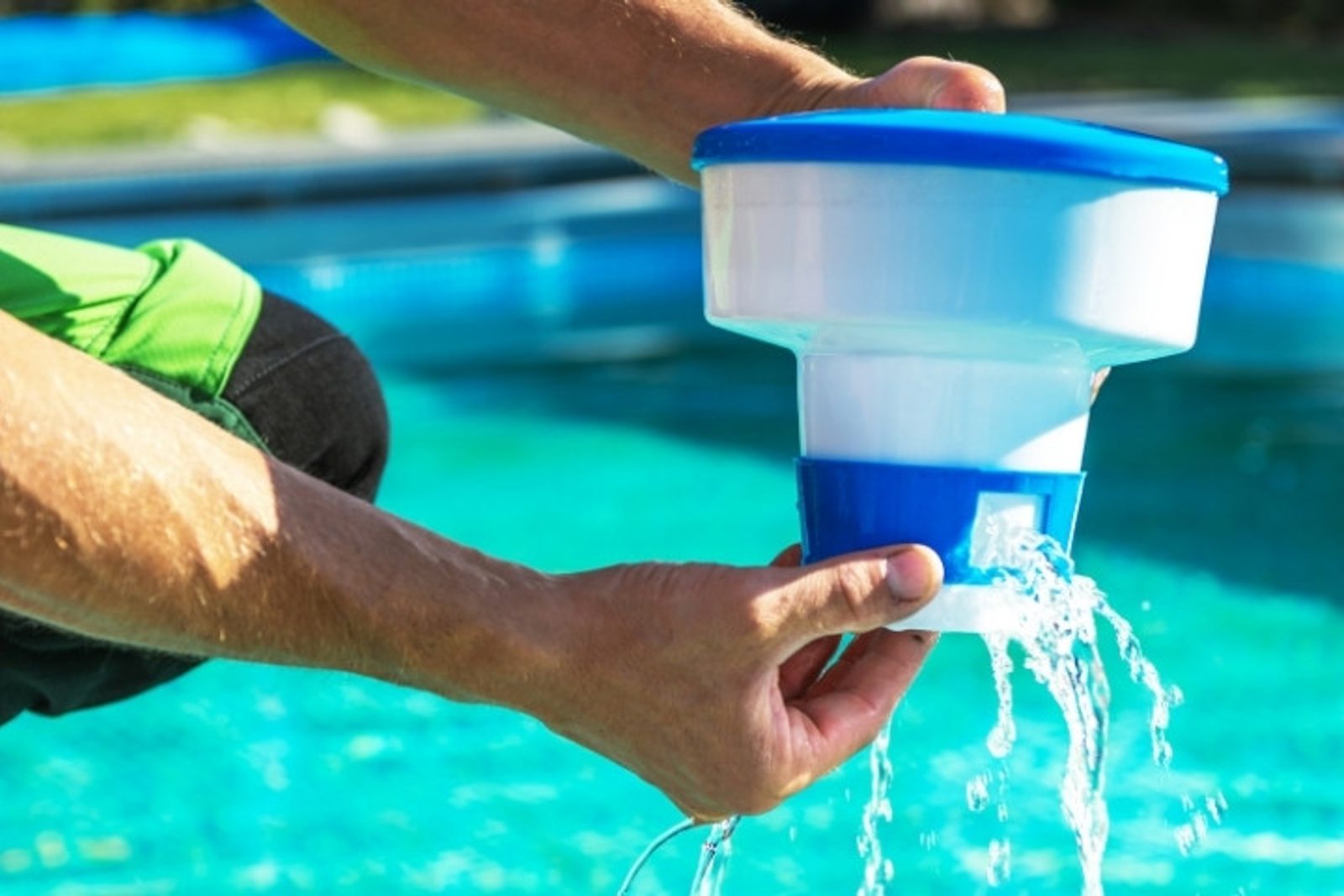
Most pool problems can be managed with consistent maintenance, accurate water testing (liquid test kits are more reliable than test strips for precision), and a prompt response when something looks off.
These issues are generally manageable with good maintenance habits:
- Cloudy water from chemistry imbalance
- Surface foam from algaecide overuse or bather load
- Algae growth caught in the early stages
- Organic staining from leaves or debris
- Chloramine odor addressed with shock treatment
These issues benefit from a professional assessment:
- Recurring algae blooms despite correct chemistry (usually a circulation problem)
- Persistent metal staining that doesn't respond to treatment
- Low pressure that remains after filter cleaning and basket clearing
- Suspected air leaks or plumbing problems
- Scale or liner staining that may require acid washing or resurfacing
- Any concern about structural leaks
The clearest signal that it's time to call someone: you've corrected your water chemistry, cleaned your filter, and the problem keeps coming back. Recurring problems almost always point to a systemic issue, whether it's circulation design, equipment wear, or a structural concern, that a professional can diagnose and fix more efficiently than continued trial and error at home.
You Don't Have to Figure It Out Alone
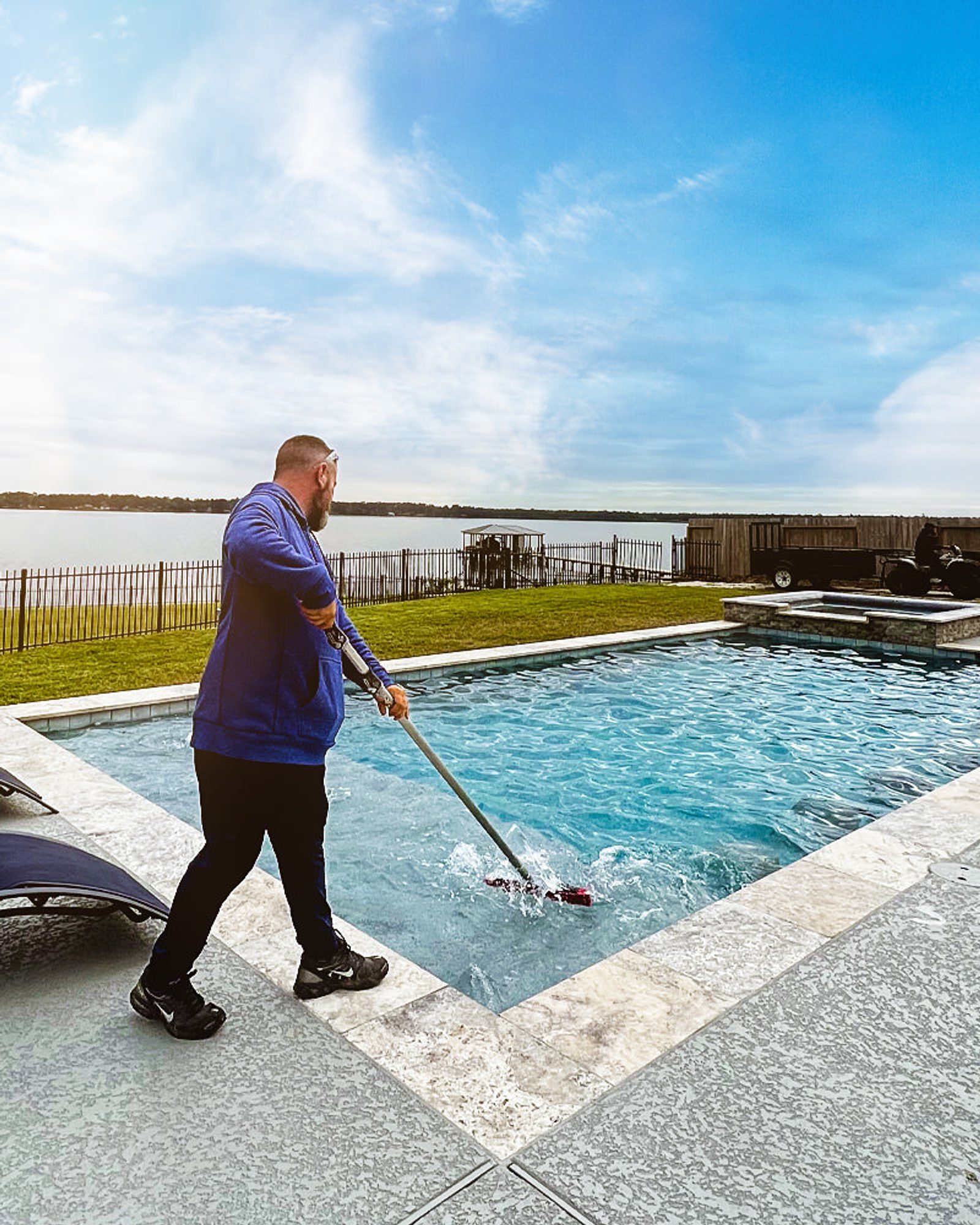
Pool problems are common. The causes are usually straightforward once you know what to look for. But there's a real difference between a pool that's manageable and a pool that's actually enjoyable, and getting there often means having the right help.
Whether you're dealing with persistent water issues, surface staining, equipment concerns, or just want a professional set of eyes to make sure everything is running the way it should, GM Outdoor Living Pool & Spa is here to help. Schedule your pool assessment today!
Consistent maintenance is always cheaper than deferred repairs. If something looks wrong in your pool, the best time to address it was last week. The second-best time is now.
Related Articles

Patio Furniture Ideas for Houston Poolside Lounging
Chlorine splash, humidity, and Gulf Coast storms wear out poolside furniture fast. Learn which materials, seating, and shade options hold up around a Houston pool deck.

Complete Pool Renovation Guide From Houston Pool Builders
Houston pool renovation starts with understanding your pool’s condition. Explore repairs, resurfacing, upgrades, and how to prioritize the work.

How to Plan a Custom Outdoor Kitchen in Houston: A Step-by-Step Guide for Homeowners
Before you choose a grill or a layout, get the planning right. Here's how Houston homeowners can prepare for a custom outdoor kitchen, from space and utilities to drainage and HOA approval.